"We don't."
That is Bozeman's community development manager, Chris Saunders, answering a reporter's question about whether the city has any tool to keep land prices from landing on the next buyer's shoulders. It is not a hedge. It is the plainest possible description of where city authority stops and the open market takes over, and it happens to fall exactly on the line most buyers assume is just a formality: the city limits.
If you have been comparing homes inside Bozeman against anything ten or fifteen minutes outside it, you have probably noticed the math does not work the way it should. The instinct is that leaving city limits buys you more land for less money. In Bozeman right now, it often buys you more land for a lot more money. Understanding why turns out to matter more than the median price itself.
The boundary that stopped being a formality in 1999
Bozeman used to have zoning influence that extended past its own city limits. That authority ended in 1999. Since then, Saunders has confirmed, land immediately outside the city falls entirely under Gallatin County's jurisdiction, with its own subdivision rules, its own review process, and its own timeline for whether and when a parcel ever gets folded into the city at all.
The county has a name for the ring of land surrounding Bozeman where this handoff plays out: the Donut. County planning documents actively encourage urban-density development in that ring to annex into the city, and encourage medium-density projects nearby to prepare for annexation down the road. Encouraged is not the same as required. The city, for its part, only annexes something like six to ten parcels a year. That is a narrow door for a metro area adding thousands of new residents.
What this means in practice: a lot next to a subdivision that flies the city's water and sewer lines might sit in the county for years, on a private well and septic system, before anyone files annexation paperwork, if anyone ever does. Saunders put the tradeoff simply: building the same hundred homes inside the city, at city density, uses far less land than spreading those same hundred homes across county parcels. That single fact is doing most of the work behind the price gap buyers keep running into.
What the numbers actually show, and why they cut against the obvious guess
As of March 2026, a local market report broke out Bozeman's residential sales by whether they sat inside or outside city limits, and the split is not subtle.
| Area | Median price | Notes |
|---|---|---|
| Bozeman, inside city limits | $772,500 | Single-family homes, March 2026 |
| Bozeman, outside city limits | $1.15 million | 76 days on market, 136 active listings |
| Gallatin Gateway | $1.04 million | 74 days on market |
| Belgrade | $555,000 | 77 days on market |
Realtor.com's own Bozeman snapshot from around the same period showed a $758,000 median listing price inside the city with 705 active homes, while Gallatin County as a whole carried a higher median listing price near $827,000 across 1,221 active homes. Redfin's March 2026 read put the city median closer to $665,000. Every one of these sources counts things slightly differently, and that is worth sitting with for a second rather than picking a favorite number. Some are measuring list price, some sold price, some rolling every housing type together and some isolating single-family homes. None of that inconsistency changes the direction of the pattern. Every version of the data shows the same thing: land outside Bozeman's city limits is not the discount option. It is the premium one.
Zoom out to the whole valley and the same logic holds up. The 2026 Gallatin Valley Housing Report, produced by the Southwest Montana Association of Realtors with the University of Montana's Bureau of Business and Economic Research, put the county's median home price at roughly $800,000, double what it was in 2019. Bozeman and Manhattan share that $800,000 figure. Belgrade sits just under $600,000. West Yellowstone and Three Forks come in lowest, near $450,000. The cheaper markets in this valley are not the rural edges next to Bozeman. They are the towns with their own separate identity and their own separate infrastructure, thirty to forty minutes out.
Why the edge of town skews expensive instead of cheap
The intuitive story is that city land costs more because it is scarcer and more convenient. That is true as far as it goes, but it misses what is actually for sale on each side of the line.
Inside city limits, Bozeman's growth over the past few years has leaned hard into density. Of the roughly 1,622 housing units permitted across Gallatin County in 2025, Bozeman accounted for 1,056 of them, and most of that inside-city construction was multifamily. Saunders framed the tradeoff this way: if the city is not going to keep growing outward, it grows inward and upward instead. That produces more condos, townhomes, and smaller-lot infill housing inside the line, which pulls the inside-city median down even as demand stays strong.
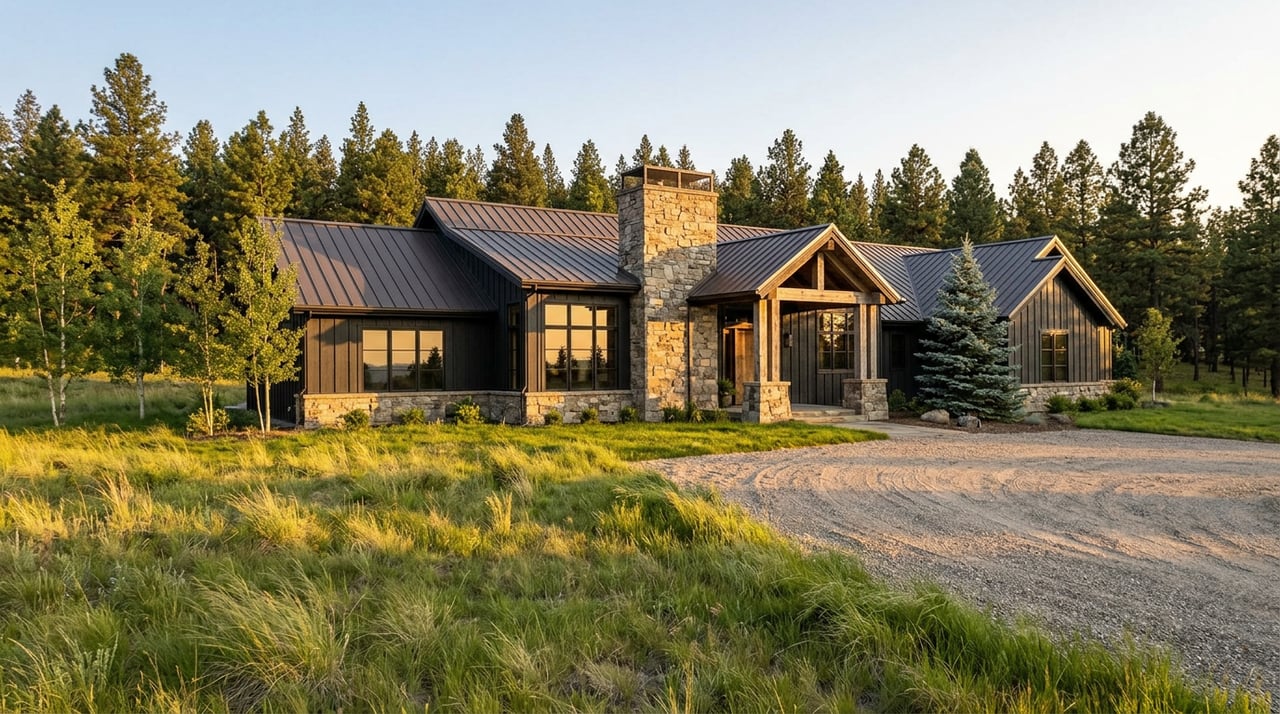
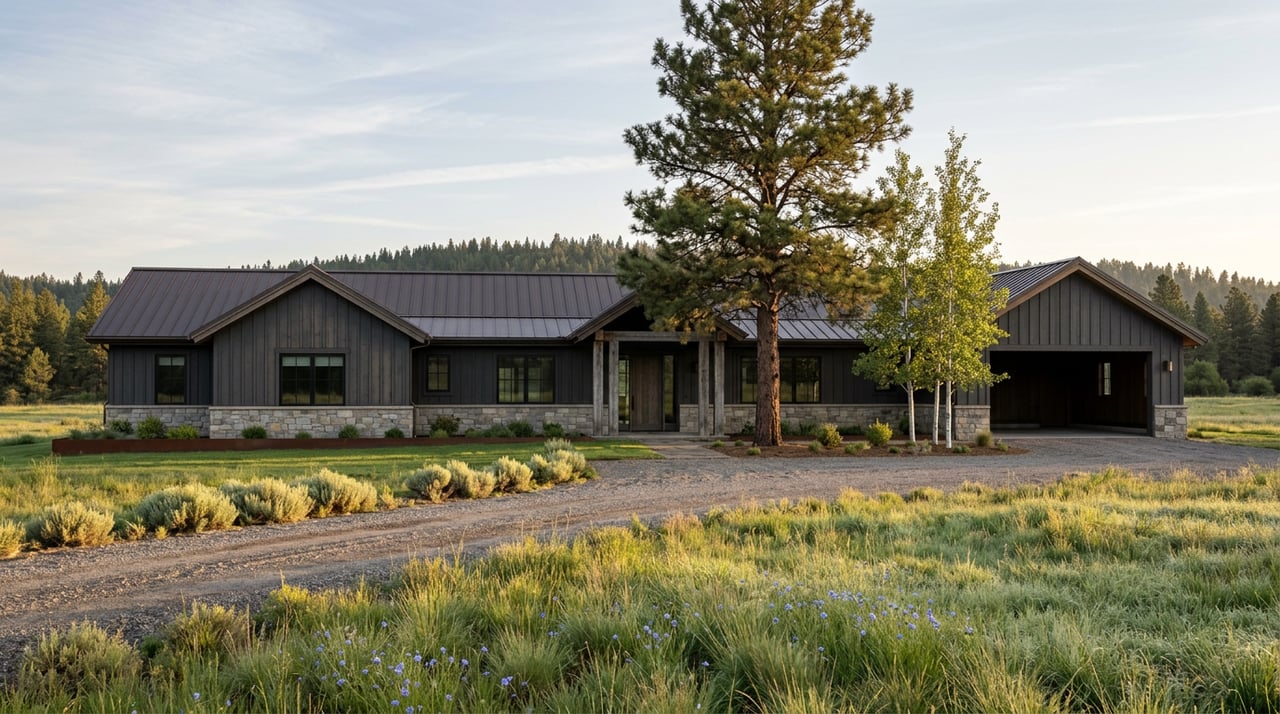
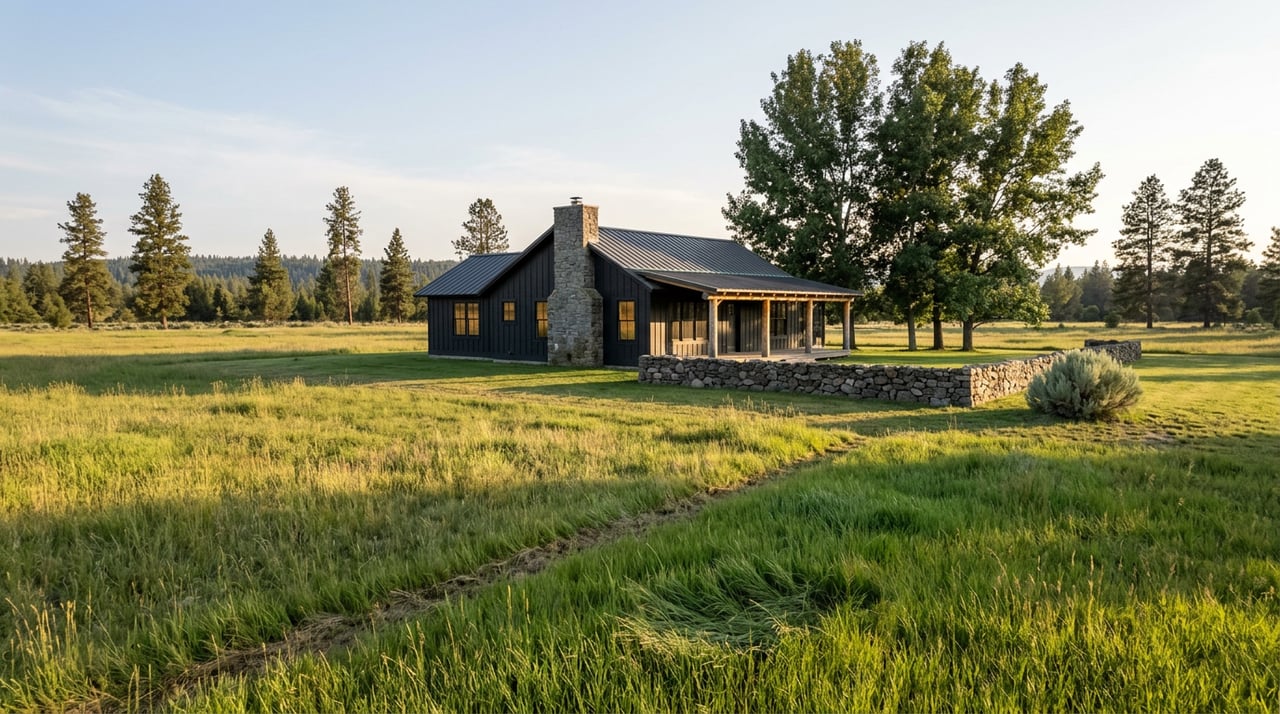
Outside the line, in the county's Donut and beyond, the available land tends to come in bigger parcels with fewer subdivision restrictions, and it draws buyers who want acreage, privacy, or a build that would never fit on a standard city lot. That is a luxury and lifestyle buyer pool, not a bargain-hunting one, and Gallatin Gateway's $1.04 million median and the $1.15 million figure for unincorporated land near Bozeman reflect exactly that. You are not comparing the same product on both sides of the city limits sign. You are comparing infill housing to acreage, and the acreage costs more.
The infrastructure question nobody puts on the listing sheet
Here is where the boundary stops being an abstraction and starts affecting a specific offer. A home inside city limits is almost always tied into municipal water and sewer. A home in the county, even one a few hundred yards past the sign, may be running on a private well and a septic system, with all the testing, maintenance, and eventual replacement costs that come with owning both. Saunders' point about density using land more efficiently is really a point about infrastructure: city development plugs into pipes that already exist, while county development has to solve for water and waste on its own, parcel by parcel.
None of this makes county living a worse choice. Plenty of buyers want the well, the septic, the acreage, and the distance from a shared water main precisely because it comes with more control and more room. It does mean that two listings that look comparable on price per square foot can carry very different ongoing obligations, and a well and septic inspection deserves the same attention a buyer would give the roof or the foundation.
What this means if you are comparing neighborhoods on paper
Gallatin County's own affordability numbers explain why so many buyers start looking just past the city line in the first place. In 2023, the county's median home price required an annual household income around $181,000 to comfortably afford, against an actual median household income closer to $101,000. That gap is wider here than in comparable Montana counties like Park, Madison, or Yellowstone. When the math inside city limits feels impossible, it is natural to widen the search radius and assume distance will fix the budget problem.
In Bozeman's case, it usually does not, at least not in the direction most buyers expect. The fix tends to run the other way: toward Belgrade, toward Three Forks, toward towns with their own city limits and their own separate price logic, rather than toward the unincorporated land immediately ringing Bozeman itself.
Before you treat two listings as comparable because they sit close together on a map, it is worth asking a short list of questions that the price sheet will not answer. Is the property inside city limits or in the county? If it is in the county, is it on municipal or private water and sewer? Has an annexation petition ever been filed, and if so, what happened to it? Given that the city only processes a handful of annexations a year, is there any real prospect of that changing before you would want it to.
Those questions do not show up in a median price, and they will not show up on a portal's summary page. They are the difference between understanding what a home costs today and understanding what it might cost, or require, five years from now.
If you are weighing a home inside Bozeman against one just past the line and want a read on what that specific parcel's status actually is, Quinn Real Estate can walk the county and city records with you before you write an offer. Let's Connect.