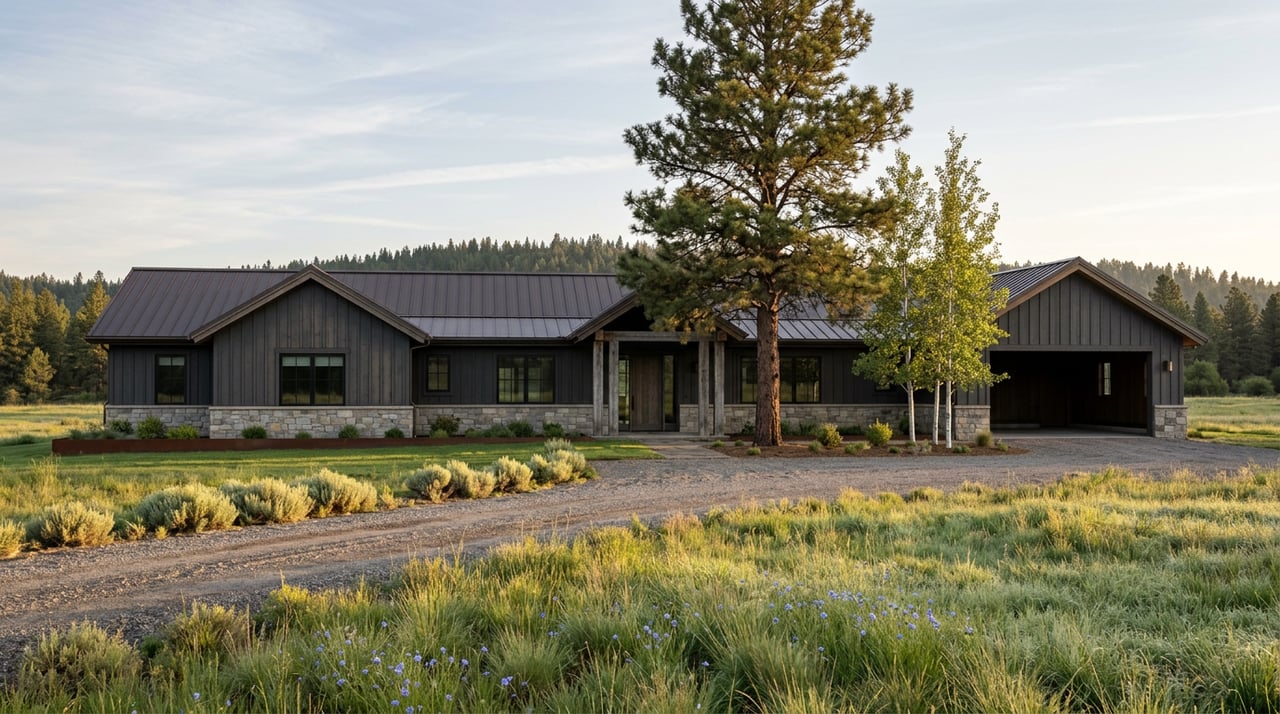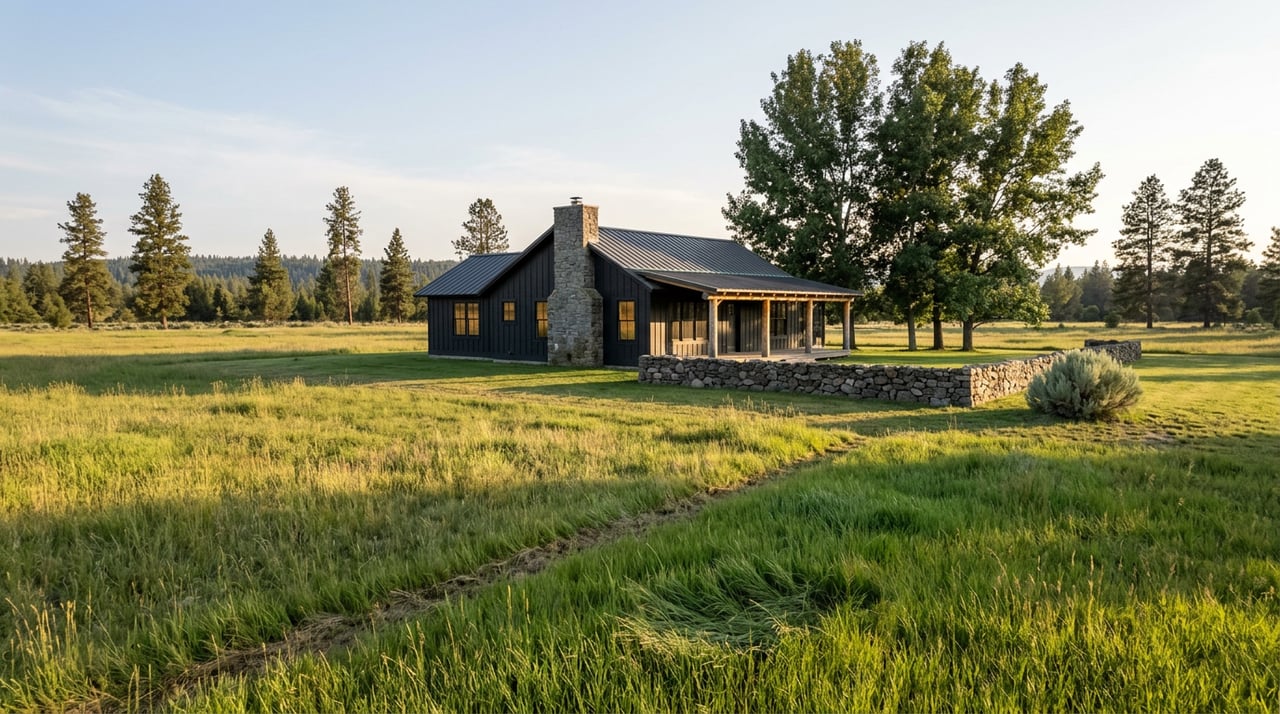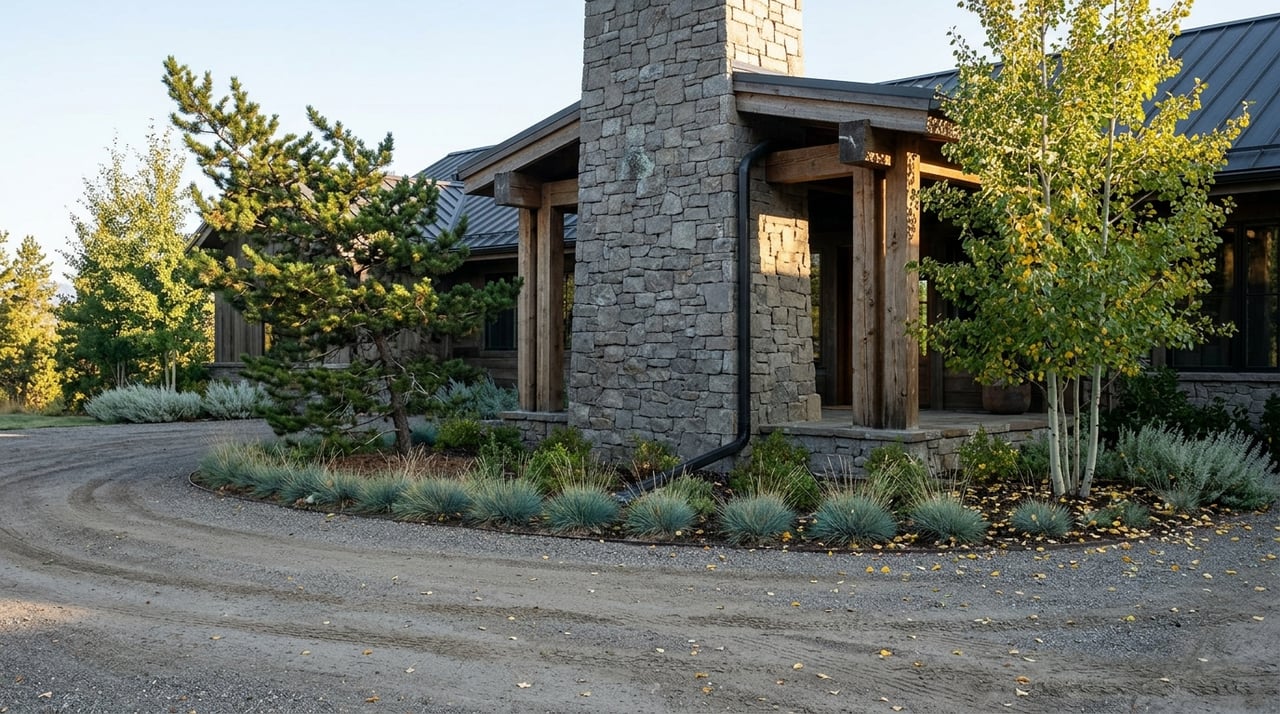
Picture two condos in Big Sky, roughly the same square footage, the same view of Lone Peak, listed within a few thousand dollars of each other. One buyer moves in and calls it home eight months a year. The other locks the door after ski season and lists it on Airbnb between visits. Same price. Same building, maybe even the same floor.
Starting with the tax bills that go out this November, those two owners are not paying anything close to the same amount to keep the lights on.
That gap is not a fluke of the market. It is written into Montana law, and it lands harder in Big Sky than almost anywhere else in the state, because of how Big Sky is actually owned. If you are comparing a Big Sky purchase against something in Bozeman using price per square foot alone, you are missing the number that will show up on your tax bill every year you own the place.
The Split That Changes Everything in 2026
Montana's legislature passed House Bill 231 and Senate Bill 542 in 2025, and the full version of that law is now live on 2026 tax bills, the ones county treasurers mail out this fall. The law sorts every residential property in the state into one of two buckets.
If a property is someone's primary residence, occupied at least seven months of the year, or a long-term rental leased for stretches of 28 days or more for at least seven months of the year, it qualifies for a tiered homestead rate. That rate starts at 0.76% on value up to roughly the statewide median home value, then steps up as the value climbs:
| Portion of home value | Homestead rate |
|---|---|
| Up to about $380,000 | 0.76% |
| $380,000 to $760,000 | 0.90% |
| $760,000 to $1.5 million | 1.10% |
| Above $1.5 million | 1.90% |
Everything else, meaning second homes, vacation properties, and short-term rentals, gets none of those lower tiers. The entire value is taxed at a flat 1.90%, full stop, no matter how modest the home.
Montana's own revenue department projected what this would do to real tax bills. The average owner-occupied home enrolled in the homestead program was expected to see roughly an 18% decrease from 2024 levels. Long-term rentals that qualify were projected to drop about 22%. Properties that do not qualify, the second homes and short-term rentals, were projected to rise by an average of 68%. That is not a rounding difference. That is a different tax system depending on how you use the same four walls.
Why Big Sky Lands on the Expensive Side by Default
In most Montana towns, this split mostly sorts itself out in favor of homeowners, because most homes are, in fact, someone's primary residence. Big Sky is not most towns.
Recent housing data for the area put the vacancy rate at roughly 65%, meaning close to two out of three homes sit empty most of the year, used seasonally or held as investment property rather than lived in full time. Big Sky's affordability ratio, a measure of home price against local income, was recently calculated at 17.2, well above Whitefish's 11.7 and Bozeman's 8.8, and the highest of any community measured in the state. That ratio is a symptom of the same underlying pattern: a housing stock built and priced for people who do not live there year round.
Put those two facts together and the 2026 tax law reads differently in Big Sky than it does almost anywhere else. A law designed to reward primary residents and penalize investment property is landing in a market where the investment property is the majority of the inventory. Zillow's typical home value for Big Sky sat around $1.64 million as of June 2026, down about 6.8% year over year, while a separate March 2026 count of closed sales across all Big Sky property types put the median around $2.55 million, up 16.2% year over year. Those two figures measure different things, an algorithmic estimate versus actual closed transactions, and neither one captures sales inside the private Yellowstone Club, which are not publicly reported. But both point the same direction: high dollar values, sitting squarely in the top tier where the gap between 1.10% and a flat 1.90% is largest in absolute terms.
The Moment That Catches Buyers Off Guard at Closing
Here is where the law gets personal for anyone buying right now.
Homestead status is not a feature of the house. It belongs to the person who applies for it, and it does not transfer at closing. The state's guidance is explicit that once someone qualifies, they stay qualified until they sell, move, or file for a homestead elsewhere. A change of ownership is exactly the kind of event that resets the clock. A new owner moving into a Big Sky home as a full-time residence does not inherit the previous owner's homestead status. They have to apply for their own.
The annual filing window runs from December through March 1 each year, through the Department of Revenue's homestead portal. Miss it, and the property defaults to the flat 1.90% rate for that tax year regardless of how you actually use the home. Anyone closing on a primary residence in Big Sky this year should treat that March 1, 2027 deadline as part of the closing checklist, not an afterthought for next spring. This is general information rather than tax advice, and anyone with a more complicated ownership structure, a trust, an LLC, a property with a rental unit attached, should confirm their specific situation with the Department of Revenue or a tax professional before assuming either rate applies.
The County Line You Can't See on a Map
Big Sky has no city government. It is an unincorporated place split between two counties, Gallatin and Madison, and day to day it runs on a patchwork of special districts rather than a mayor and council. The Big Sky Resort Area District, funded by a 4% resort tax on non-essential goods and services that has been in place since 1992, has been described in state political reporting as functioning as the community's de facto government, because there is no other elected body that covers the whole place.
That split matters for more than paperwork. The Big Sky Fire District covers both the Gallatin and Madison County portions of town, but a county-level miscalculation meant that for four straight years, Gallatin County applied the full number of voter-approved mills to its fire levy instead of capping the total dollar amount as state inflation limits require. Madison County's side of the same fire district was assessed correctly the entire time. The result, reported by the Bozeman Daily Chronicle in October 2025, was that Gallatin County taxpayers inside the fire district overpaid by roughly $8.5 million before the error was caught. Two homes served by the exact same fire department, same trucks, same response times, had been paying different effective rates for years, purely based on which side of an invisible county line they sat on.
That is the second layer sitting on top of the state's homestead split. Your classification determines which rate applies to you. Your county determines who is doing the math correctly.
Rental Rights Aren't Uniform Either
Short-term rental use is one of the paths that disqualifies a property from homestead treatment, which makes the rules around who can actually run an STR in Big Sky directly relevant to the tax question, not a separate issue.
Those rules vary block to block. MeadowView, a workforce housing development, prohibits short-term rentals outright and requires owner-occupancy. Sweetgrass Hills, another subdivision, passed a covenant amendment allowing existing short-term rental owners to continue operating, but only with an annual signed registration and a listed 24-hour local contact. A state law, Senate Bill 300, limits how far homeowners associations can go in restricting an owner's basic rights, including the right to rent a property for any length of time, compared to the rules in place when that owner bought. That protects existing rental owners from having the rug pulled out from under them by a later covenant change, but it does not make every subdivision's rules identical, and it does not override the state tax classification either way.
A buyer weighing whether to run a property as a short-term rental needs to check the specific subdivision's covenants before assuming it is allowed, and needs to understand that choosing to rent short-term also locks the property into the flat 1.90% tax rate rather than the tiered homestead schedule.
What This Means If You're Comparing Neighborhoods
None of this means Big Sky is a bad place to buy. It means the number on the listing page answers a different question than the one most buyers are actually asking. A Bozeman home and a Big Sky home at the same price are not carrying the same likely tax classification, and Big Sky's own governance quirks mean even two Big Sky homes at the same price can differ depending on which county line they sit inside and what the subdivision covenants allow.
FAQ
Does the homestead exemption transfer to me if I buy a home from someone who already had it? No. Homestead status belongs to the person who applied and occupies the home, not the parcel. A change in ownership is one of the events that can reset it, so a new owner intending to live in the home full time needs to file their own application with the Montana Department of Revenue.
Is there a city permit required to run a short-term rental in Big Sky? No. Big Sky has no city government, so there is no city-level STR permit or cap. Operators still need a Montana Public Accommodation License at the state level, plus registration with the Big Sky Resort Area District for resort tax collection, and they need to confirm their specific subdivision's covenants allow rentals.
Which county is a specific Big Sky property in, Gallatin or Madison? It depends on the parcel. Big Sky straddles the county line, and the two counties have historically administered levies differently, as shown by the multi-year fire district overcollection on the Gallatin side. Buyers should confirm county jurisdiction as part of due diligence rather than assuming based on the neighborhood name alone.
Understanding which side of these lines a property falls on, and what that means for the real cost of owning it, is exactly the kind of groundwork Deirdre Quinn walks Big Sky buyers through before they write an offer. If you are comparing a move to Big Sky against Bozeman or anywhere else in the Gallatin Valley, let's connect and look at the specific numbers for the specific property, not just the number on the listing page.